Preparing Your Garden for Autumn with Fresh Topsoil
It is easy to assume that spring and summer are the main seasons for garden maintenance. While both are important, autumn is also an ideal time to prepare your garden for the months ahead and give lawns, flower beds and planting areas the support they need for healthy growth next spring.
If your lawn has suffered during the summer, you are preparing new flower beds, or you plan to lay fresh turf, incorporating topsoil into your autumn garden maintenance can help improve soil structure and create better growing conditions.
Key Summary: Using Topsoil in Your Garden This Autumn
- Ideal time for garden preparation: Autumn's cooler temperatures, naturally moist soil and regular rainfall can provide favourable conditions for establishing lawns, plants and bulbs.
- Lawn care: Quality soil and specialist lawn top-dressing can be used after scarifying and aerating to help level minor imperfections and improve the growing environment around grass roots.
- Better soil quality: Using screened topsoil can reduce the amount of large stones, roots and unwanted debris introduced into beds, borders and lawn areas.
- Preparing for new turf: A suitable layer of quality topsoil can provide the root-friendly foundation required when creating a new lawn.
Preparing Your Lawn for Next Year
The lawn maintenance you carry out during autumn can help prepare your grass for healthy growth when warmer weather returns. Tasks such as scarifying, aerating and overseeding can all form part of an effective autumn lawn-care programme.
After a long, dry summer, lawns may contain thin, damaged or compacted areas. Aerating the ground can improve the movement of air and water around the roots, while overseeding can help repair bare or thinning patches.
Following aeration, a suitable lawn top-dressing can be brushed into the surface and aeration holes. This can help improve soil structure, fill minor low spots and create improved conditions for grass growth.
For larger repairs or areas where additional soil is required, a fine screened topsoil for lawns can also be useful for levelling and preparing the ground before seeding.
How to Choose Quality Screened Topsoil
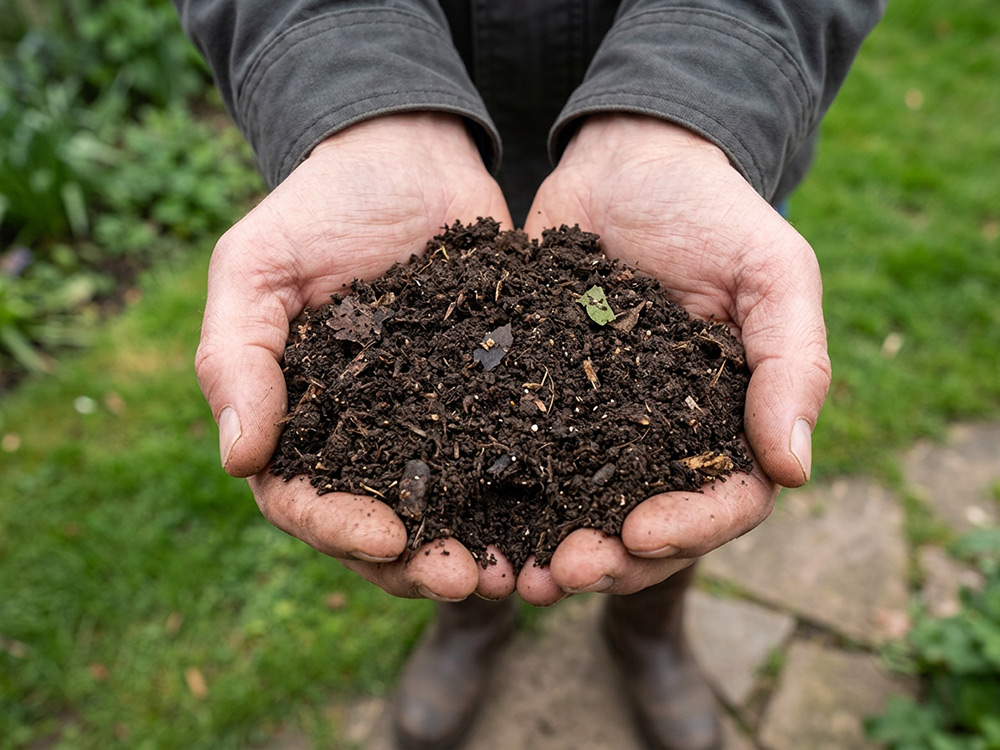
Choosing the right topsoil is important when preparing a lawn, flower bed or garden border. Screened topsoil has been passed through a screen to remove larger stones, roots and other unwanted material, creating a more consistent product for landscaping and gardening projects.
Unscreened or economy topsoil may contain larger stones, roots and debris. While this may be suitable for some bulk landscaping applications, a finer screened product will usually be more appropriate when preparing lawns, raised beds, flower borders and other cultivated areas.
When buying topsoil, look for a reputable supplier and check the specification of the product being supplied. Topsoil sold as compliant with BS 3882:2015 should meet the relevant British Standard specification for topsoil.
Good-quality general-purpose topsoil can be used to improve or establish flower borders, vegetable growing areas, raised beds and lawns where the existing soil is unsuitable or insufficient.
Using Fresh Topsoil for Autumn Planting
Autumn is also an excellent time to prepare flower beds and borders for planting. If your existing soil is poor, shallow or depleted, incorporating suitable fresh topsoil can help create a better growing environment.
Quality garden topsoil can be used when preparing areas for spring-flowering bulbs and other autumn planting. Loosening the existing ground and incorporating suitable soil or organic matter can improve the structure of the planting area and make it easier for roots to establish.
Always select plants that are suitable for your soil conditions and follow the recommended planting depth and timing for the particular bulbs or plants you are using.
Preparing the Ground for a Brand-New Lawn
Sometimes an existing lawn may be too badly damaged for simple spot repairs or overseeding. If you are planning to start again with fresh turf, autumn can be an excellent time to lay a new lawn.
Preparing the soil correctly before laying turf is essential. A good-quality layer of topsoil for turf gives new grass roots suitable soil in which to establish.
- Clear the area: Remove weeds, old vegetation, roots, rubble and large stones.
- Prepare the existing ground: Break up compacted soil and ensure the area drains adequately.
- Add quality topsoil where required: Aim for at least around 100mm (4 inches) of suitable topsoil for a new lawn where sufficient existing topsoil is not already present.
- Level the surface: Rake the soil thoroughly to create an even surface and remove remaining stones or debris.
- Firm the ground: Gently firm the soil before carrying out a final rake and laying the turf.
Proper soil preparation gives newly laid turf a better opportunity to establish a strong root system and develop into a healthy, even lawn.
How Much Topsoil Do I Need?
Calculating how much topsoil you need is relatively straightforward. First measure the length and width of the area in metres:
Length × Width = Surface Area in m²
Then multiply the surface area by the required depth of topsoil in metres:
Surface Area × Depth = Volume in m³
For example, if you have a lawn measuring 10m by 5m and want to add 100mm (0.1m) of topsoil:
10m × 5m × 0.1m = 5m³ of topsoil
Bulk bag weights and volumes can vary considerably between suppliers and according to moisture content, so always check the stated volume and coverage of the specific topsoil you are purchasing rather than relying solely on bag weight.
Get Your Garden Ready for Autumn
Taking the time to improve your garden soil during autumn can provide benefits well beyond the colder months. Whether you are repairing a tired lawn, preparing flower beds, planting bulbs, filling raised beds or creating a completely new lawn, starting with suitable quality materials can make a significant difference to the finished result.
Choosing quality screened topsoil and preparing your ground correctly now can create healthier growing conditions and help your garden return stronger when spring arrives.
Autumn Topsoil Care FAQs
How deep should topsoil be when laying new turf?
As a general guide, aim for at least 100mm (around 4 inches) of suitable topsoil when preparing ground for a new lawn where adequate existing topsoil is not already present. The required depth may be greater if the existing ground is particularly poor, shallow or unsuitable.
What is the difference between screened topsoil and standard topsoil?
Screened topsoil has been passed through a mesh or screening system to remove larger stones, roots and other unwanted material. This creates a finer and more consistent product that is particularly useful for lawns, seeding, planting areas, raised beds and flower borders.
Is screened topsoil suitable for lawns?
Yes. Fine screened topsoil can be useful when preparing the ground for a new lawn, repairing uneven areas or creating a suitable surface before seeding. For routine top-dressing of an established lawn, a purpose-made lawn dressing containing suitable proportions of soil, sand and organic material may be more appropriate.
When is the best time to lay new turf?
Autumn is one of the best times to lay turf because soil temperatures are still relatively warm while cooler weather and increased rainfall reduce the risk of the turf drying out. Avoid laying turf when the soil is frozen, waterlogged or excessively wet.
How do I calculate how much topsoil I need?
Multiply the length of the area by its width in metres to calculate the total surface area. Then multiply that figure by the required depth in metres. For example, a 20m² area requiring 100mm (0.1m) of topsoil would need approximately 2m³ of material.
What does BS 3882 mean for topsoil?
BS 3882 is the British Standard specification for topsoil. The current version is BS 3882:2015 and sets requirements for natural and manufactured topsoils that are moved or traded for landscaping and related uses.