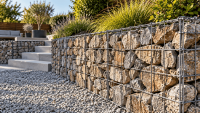

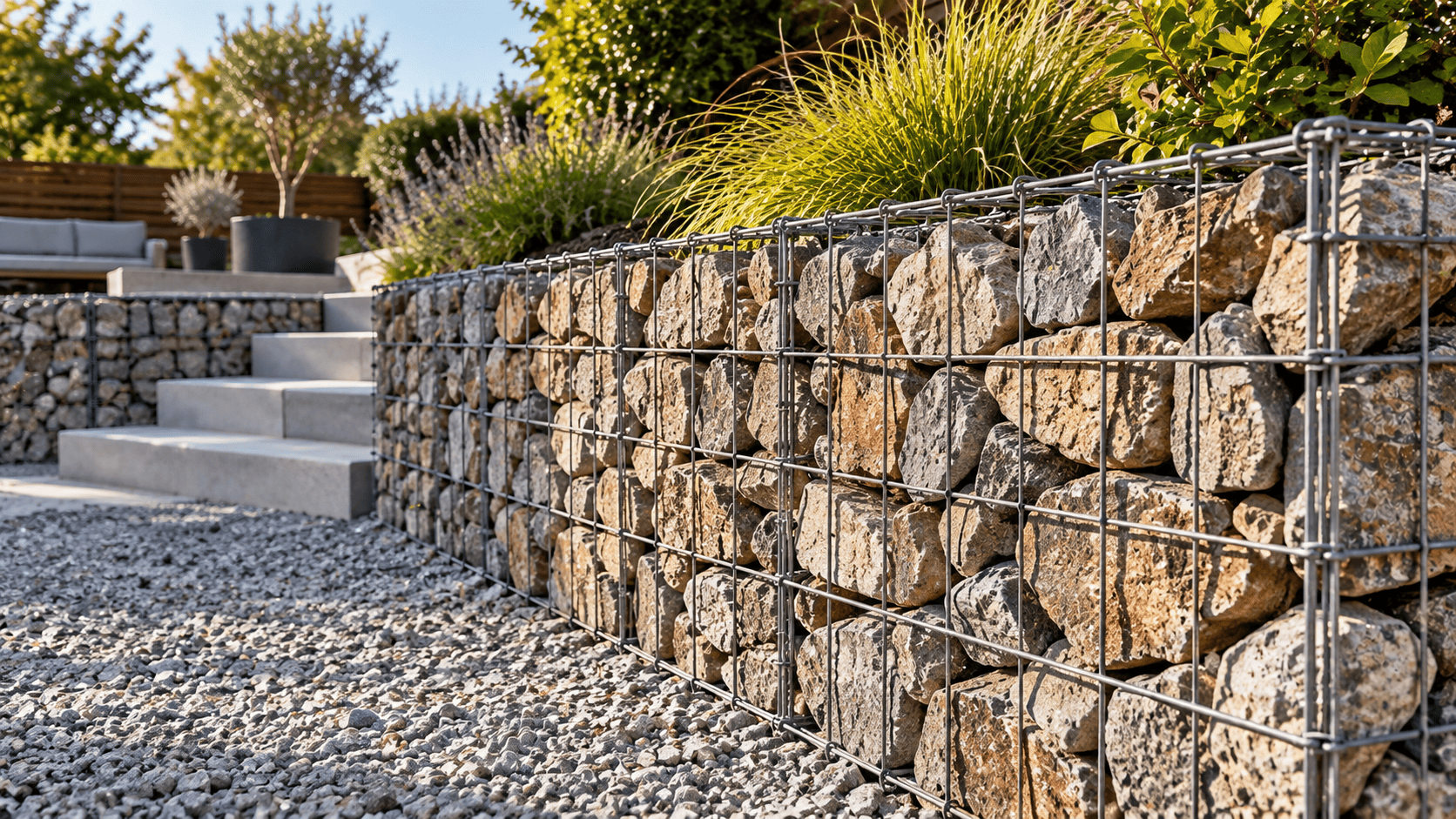
Gabion baskets are versatile steel wire cages filled with stone, rock or cobbles to create durable retaining walls, garden features, planters, seating and other landscaping structures.
If you are working with an outdoor space that doesn’t appear sculpted, smooth and even, it can be hard to picture a garden that is going to look perfect. However, the good news is that there are always options for landscaping and creating your perfect garden space.
If your garden is uneven, one thing to consider is a gabion basket. These are more versatile than many people assume, with options for turning them into garden features, planters and even outdoor seating.
What Is a Gabion Basket?
A gabion basket is a heavy-duty steel wire cage filled with rocks, stones or cobbles to create strong and durable outdoor structures.
Think of a gabion basket as a heavy-duty, steel wire cage that you fill up with rocks, stones or cobbles to build super-sturdy outdoor features. Originally used mainly by engineers for massive retaining walls and riverbank protection, they have become hugely popular in everyday garden design because they look brilliant and take almost zero effort to maintain.
You simply set up the wire frame, pack it tightly with your preferred decorative stone and you have an instant rugged feature, whether that is a raised garden bed, a modern seating bench or a solid boundary wall.
Gabion Basket Mesh vs. Stone Sizing
Gabion stone should be sized according to the mesh aperture so that the majority of the stones are too large to fall through the basket.
It is easy to assume that buying the size of gabion basket to suit your project and filling it with stones is as easy as it gets. Whilst it doesn’t need to get too complicated, it is important to consider the size of stone you are going to use.
For example, the mesh aperture could typically be 75mm by 75mm or 50mm by 100mm, so you want to make sure that the size of stone is appropriate for the gap.
Gabion stones are naturally graded across a size spectrum rather than being uniform. A 75mm–150mm grading means the stones vary in size within that range. The smaller stones nestle into the gaps between larger rocks, creating a denser, more cohesive structure inside the cage.
Best Type of Gabion Stones to Use
The best gabion stone depends on whether strength, appearance, budget or a combination of these factors is most important to your project.
At Mainland Aggregates, we supply a range of high-quality stones tailored to different project needs and budgets:
| Gabion Stone Type | Key Characteristics | Typical Uses |
|---|---|---|
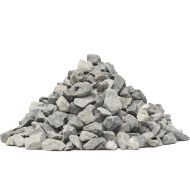
| Crushed Limestone & Granite | Extremely durable, clean and available in neutral greys and buff tones | Structural gabions, retaining walls and applications requiring excellent interlocking stability |
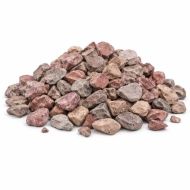
| Scottish Red / Golden Cobbles & Pebbles | Naturally rounded and water-worn with warm, organic colours | Garden feature walls, planters and decorative gabion projects |
| Basalt & Slate | Deep charcoal and layered finishes with a strong architectural appearance | Modern gardens and high-contrast decorative features |
| Recycled Aggregates | Cost-effective and environmentally conscious option | Non-visible structural layers and base fills |
Crushed Limestone & Granite
The classic structural choices. Extremely durable, clean and available in neutral greys and buff tones that offer excellent interlocking stability.
Scottish Red / Golden Cobbles & Pebbles
Naturally rounded, water-worn stones that add warm, organic and rustic character to garden feature walls and planters.
Basalt & Slate
Ideal for sleek, modern garden designs. Deep charcoal basalt and layered slate spalls provide a high-contrast, architectural look.
Recycled Aggregates
A cost-effective, eco-friendly option ideal for non-visible structural layers or base fills.
Structural vs. Decorative Gabion Stones
Structural gabions require strong angular stone that interlocks under load, while decorative gabions allow greater emphasis to be placed on colour, texture and appearance.
When it comes to choosing the best gabion stones for your project, you should consider the size of stones as well as the job they are going to be doing once they are in place. For example, are they just for decoration or are they going to need to withstand soil pressure?
Structural Gabion Stone
For retaining walls, embankments and heavy soil-retention projects, structural integrity is priority number one. Here, crushed angular rock such as quarried limestone or granite is essential.
The flat faces and sharp edges interlock under weight, creating a solid mass that resists settling, movement and lateral earth pressure.
Decorative Gabion Stone
When building additions such as low garden borders, seating or outdoor fireplaces, you’ll want something that looks great. Decorative stones such as smooth Scottish cobbles, rich slate spalls or colourful gravel can add striking visual interest.
For cost-effective decorative builds, landscapers often use a “facing technique”: hand-packing attractive decorative stone against the visible mesh face while filling the hidden interior with standard structural stone.
Essential Qualities of High-Quality Gabion Stone
High-quality gabion stone should be durable, weather-resistant, clean, free-draining and strong enough to withstand the loads placed upon it.
Not just any rock pulled from the ground belongs in a gabion basket. To ensure long-lasting performance, high-quality gabion stone should feature:
- Frost and weather resistance: UK winters bring freeze-thaw cycles that can shatter soft or porous rock. High-density, non-porous quarried stone resists cracking and crumbling over time.
- Clean and screened finish: Quality stones are screened to remove soil, clay and fine particles. Clean stone ensures your gabion basket remains free-draining and prevents unsightly mud wash-out when it rains.
- High compressive strength: Heavy retaining walls place immense load on the bottom layer of stone. Hardwearing rock types will not crush under long-term vertical load.
Whether you are taming a sloped back garden or designing a striking architectural feature, gabion baskets offer an excellent combination of rugged strength, natural beauty and low-maintenance longevity.
By choosing the right stone size for your mesh, packing the front face with care and using quality, weather-resistant quarried aggregates, you can build a structure that stands strong for decades.
Gabion Stones Explained – FAQs
What size stone do I need for gabion baskets?
For standard 75mm x 75mm mesh gabion baskets, the ideal stone size is typically 75mm to 150mm or 100mm to 200mm. The key rule is that the vast majority of stones must be larger than the mesh opening to prevent them from falling through, while having a varied sizing spread to interlock tightly.
How much stone do I need for a 1m³ gabion basket?
As a rule of thumb, one cubic metre (1m³) of gabion basket requires roughly 1.5 to 1.8 tonnes of stone, depending on the density of the rock type chosen and how tightly the stones are packed.
Do gabion stones need to be washed before filling?
It isn't essential, but using screened, clean gabion stone is strongly recommended. Unscreened aggregates contain dust and soil (“fines”) that can wash down during rainfall, staining the lower stone levels and clogging the natural drainage capabilities of the basket.
How long do gabion stone walls last?
When filled with durable, frost-resistant quarried stone such as granite, basalt or limestone and built with heavy-duty wire mesh, gabion walls can easily last between 50 and 100 years with virtually no maintenance required.