The Best Aggregates for Garden Drainage: A Homeowner’s Guide
To ensure your garden is usable all year round in all weather conditions, effective drainage is key. Wet gardens simply do not function well; walking across waterlogged surfaces is unpleasant, and the risks of slipping or dragging mud into the house are constant headaches. Beyond these inconveniences, your garden suffers as well. Saturated soil compacts underfoot, mud churns up to the surface, puddles pool across lawns, and garden borders lose their definition.
Effective water management is the ultimate solution. One of the most practical and cost-effective ways to manage surface water and protect your garden borders is through the strategic use of high-quality drainage aggregates.
Key Summary
- Select the Right Size: 20mm drainage gravel is the most versatile option for domestic French drains and lawn drainage, while 40mm gravel works best for deep soakaways, and 10mm gravel suits light surface borders.
- Always Choose Washed Stone: Always specify clean drainage gravel or washed drainage stone to ensure no sand, silt, or fine dust is present to clog pipes or geotextile fabrics.
- Creates Vital Void Spaces: Gravel improves garden drainage by creating open channels between stones, enabling water to filter down quickly into the ground rather than pooling on top.
- Protects Garden Structure: Proper aggregate drainage prevents soggy lawns, plant root rot, and long-term water damage to garden walls, patios, and house footings.
Why Good Garden Drainage Matters
It comes as no surprise that heavy UK rainfall is the enemy of a well-managed outdoor space. Garden surfaces need to handle light showers without turning soggy, but they must also cope with sudden downpours that can lead to pooling or flowing surface water.
The natural soil type in your garden plays a massive role in this. Heavy clay soils dry out in the summer months and form an almost impenetrable crust. When the first winter downpours arrive, this layer seals off, preventing water from naturally soaking away. As a result, water pools on the surface, creating muddy lawns and dangerously slippery paths.
Your plants suffer too—excess rainwater surrounding roots causes root rot and unhealthy growing conditions. Even worse, surrounding buildings can suffer when water pools against external brickwork, leading to damp problems indoors. Using suitable drainage aggregates is the simplest way to direct water away safely, keeping your outdoor spaces hazard-free and structurally sound.
Does Gravel Improve Drainage in a Garden?
Yes. When specified correctly, gravel is an exceptional material for water management and effortless drainage. By regulating the speed at which surface water reaches subsoils—even heavy clay—gravel ensures that natural drainage occurs efficiently without unwanted pooling.
This works thanks to the natural voids (open spaces) that exist between individual stones. These gaps slow down sudden surges of water, diffusing the flow across a broader surface area so it can percolate into the ground or travel smoothly along dedicated drainage channels. Compacted soil lacks these voids, which is why untreated soil quickly turns to mud and standing water.
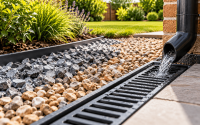
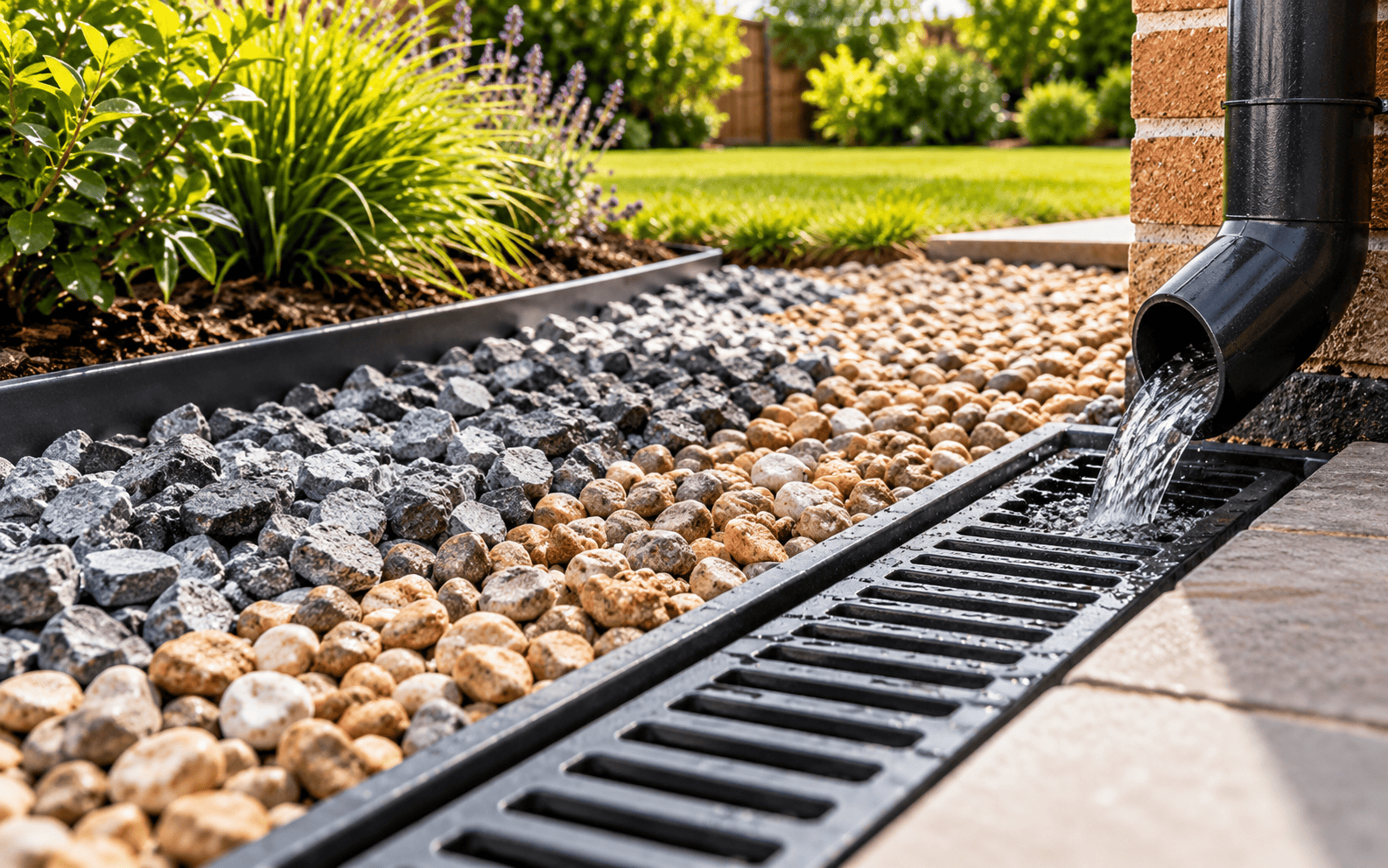
By combining the right drainage aggregate with practical landscaping solutions—such as soakaways, French drains, permeable paths, and gravel borders—even the heaviest downpours will leave your garden unaffected.
What Size Gravel Is Best for Garden Drainage?
Aggregate size directly affects water flow and structural stability. Choosing the correct size ensures your drainage system works efficiently for its intended location.
- 10mm Gravel: Ideal for decorative surface dressings, shallow borders, or fine pipe bedding where minimal movement is required. While smaller void spaces mean a slightly slower filtration rate, it offers a neat finish underfoot.
- 20mm Drainage Gravel: The ultimate standard size for most domestic applications. It offers the perfect balance between structural stability underfoot and vehicle traffic while maintaining substantial void space for rapid water movement. It is ideal for French drains and wrapping drainage pipes.
- 40mm Gravel: Excellent for high-volume drainage systems, deep soakaways, or heavy sub-base layers where maximum water flow and large voids are essential to prevent water build-up.
Clean vs. Washed Drainage Stone
To achieve maximum water movement, it is essential to use aggregate that is either single-sized or carefully graded, such as 75mm to 40mm. Single-sized washed aggregate creates an open lattice structure that allows water to pass through freely. Mixing random sizes—especially materials containing small sand or silt particles—fills those open spaces and blocks the drainage network.
Clean or washed drainage stone has undergone a washing process to remove fine dust, silt, and sand particles, leaving behind pristine stone that guarantees optimal water flow.
By contrast, unwashed sub-base aggregates like MOT Type 1 contain a dense blend of stone sizes ranging from 40mm down to fine dust. While these properties make MOT Type 1 ideal for creating compacted, load-bearing sub-bases under driveways, they are unsuitable for drainage. If used in French drains or soakaways, the fine dust washes down, clogs geotextile membranes, creates an impermeable barrier, and causes the system to fail over time.
How to Choose the Right Aggregate for Your Drainage Project
Selecting the correct aggregate size is straightforward once you know the demands of your project.
- French Drains & Pipe Wrapping: Use 20mm drainage gravel or washed drainage stone to protect pipes without restricting water flow.
- Soakaways & Deep Trenches: Use 40mm gravel to maximise void capacity and accommodate high volumes of runoff.
- Decorative Surface Borders & Paths: You have some flexibility here depending on your preferred aesthetic. Both 10mm gravel and 20mm gravel work brilliantly.
However, 20mm gravel is recommended for areas expecting vehicle traffic, as larger stones stay in place and will not get trapped in tyre treads.
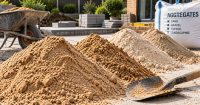
At Mainland Aggregates, we offer a wide range of clean, washed drainage aggregates available in bulk bags with reliable nationwide delivery—ensuring you get the exact material you need delivered straight to your site.
Frequently Asked Questions (FAQs)
What is the best aggregate for garden drainage?
The best aggregate for general garden drainage is 20mm washed drainage gravel. Clean, single-sized angular or rounded stones without fine dust or silt provide the optimum balance between void space and structural stability. This allows surface water to pass through quickly without clogging drainage pipes or geotextile membranes. For high-capacity soakaways, 40mm gravel is preferred, while 10mm gravel is ideal for shallow decorative borders.
What size gravel is best for drainage?
For most domestic garden drainage systems—such as French drains, pipe bedding, and trench linings—20mm gravel is the gold standard size. It is large enough to create substantial void spaces for swift water movement, yet small enough to settle neatly around drainage pipes without placing uneven pressure on the pipework. For heavy-duty sub-base drainage or deep soakaways, 40mm gravel offers maximum water flow capacity.
Does gravel improve drainage in a garden?
Yes, gravel significantly improves garden drainage. Naturally dense soils, such as clay, become easily compacted and hold onto excess moisture, creating waterlogged lawns and standing puddles. Replacing or topping compacted soil with clean gravel creates open gaps (void spaces) that allow rainwater to pass through easily under gravity, directing water safely away from lawns, patios, and building foundations.