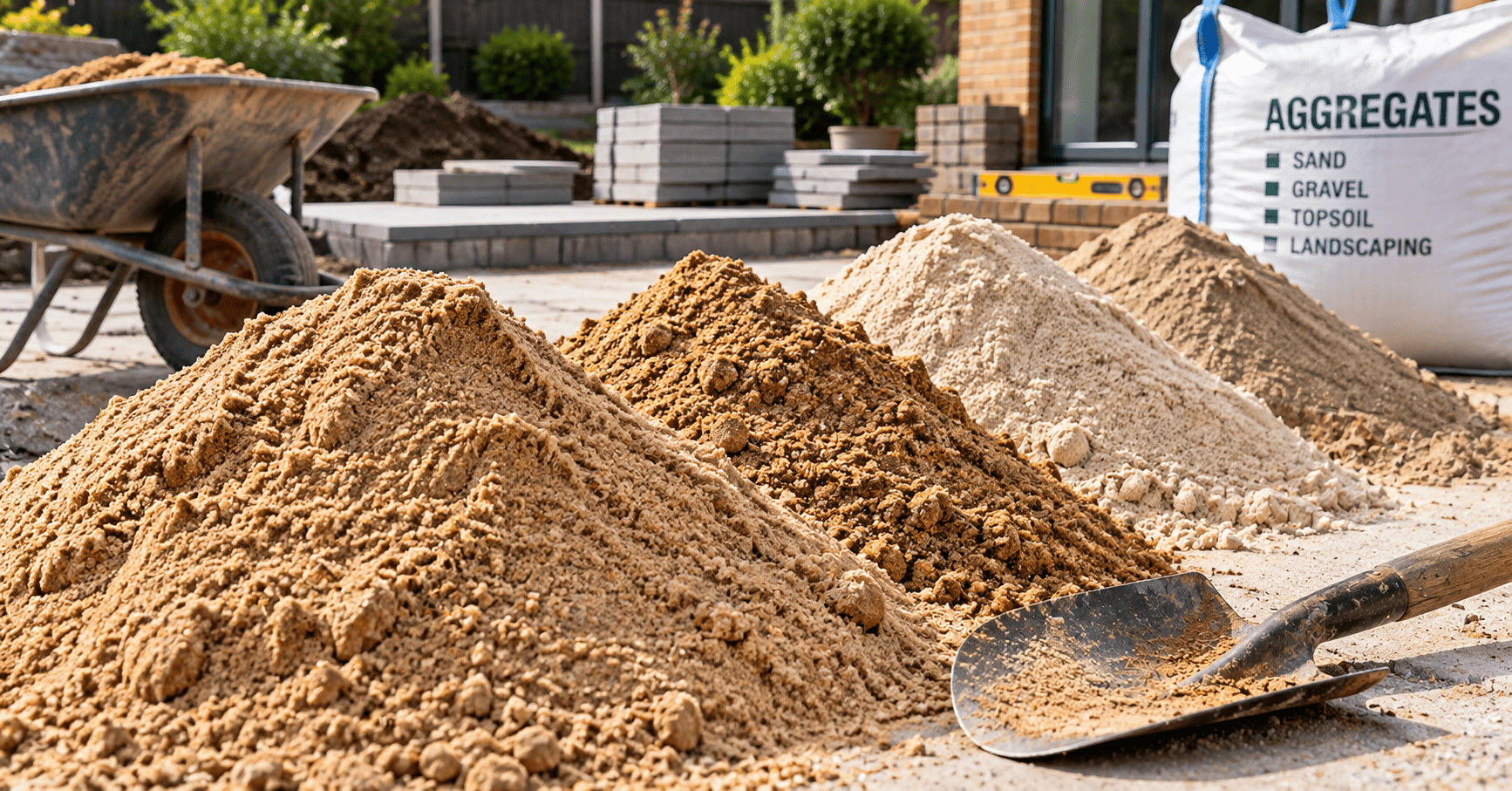
The right type of sand depends on the job. Building sand is commonly used for bricklaying and mortar, sharp sand for paving and landscaping, kiln dried sand for block paving joints, and plastering sand for rendering.
If you’re considering undertaking a landscaping or building project, it stands to reason that you are going to want to ensure you have the right tools and materials in advance. It is easy to assume that if your project requires sand, any type of sand will do the job.
However, the truth is that the type of sand you use makes a difference to both the finish and the longevity of your project. With so many options available — from fine, soft grains to coarse, angular particles — selecting the ideal product for your specific job can feel overwhelming.
However, if you work with Mainland Aggregates, we’ll talk to you about your project and your end goals, so that you can choose the right sand type for your needs.
Sand Types at a Glance
Building sand, sharp sand, kiln dried sand and plastering sand have different particle sizes and properties, making each suitable for different building and landscaping jobs.
| Sand Type | Key Features | Primary Uses |
|---|---|---|
| Building Sand | Fine, smooth, contains clay | Bricklaying, mortar, internal rendering |
| Sharp Sand | Coarse, angular, free-draining | Paving sub-bases, screeds, soil aeration |
| Kiln Dried Sand | Fine, kiln-baked, completely dry | Block paving joint filling |
| Plastering Sand | Medium-grade, washed fine sand | External rendering, wall plastering |
Building Sand: Best for Bricklaying & Mortar Joints
Building sand is a fine, workable sand commonly used for bricklaying, blockwork, pointing and mortar.
If any aspect of your project requires bricklaying, blockwork or pointing, then building sand is likely to be the best choice for your needs.
When mixed with water and cement, it creates a smooth, workable mortar that moves easily from a trowel. This consistency makes it particularly useful for bricklaying and related projects.
It is best to avoid using building sand as a bedding material for heavy paving slabs. Its fine particles do not interlock in the same way as a coarser aggregate, meaning it does not provide the same stable bedding properties as sharp sand.
Kiln Dried Sand: Best for Filling Block Paving Joints
Kiln dried sand is a very dry, fine sand designed to flow into and fill the narrow joints between block paving.
Sand is important for many exterior building projects, but it plays a particularly important role in block paving. Once you have block paving laid, the last thing you want is for the paving blocks to move and shift underfoot.
Once paving blocks start moving, surfaces can become uneven and unstable. Kiln dried sand is brushed into the narrow joints between block paving blocks on driveways and patios, helping to lock the paving together and reduce lateral movement.
Plastering Sand: Best for Exterior Wall Rendering
Plastering sand is a washed, medium-grade sand commonly used for external rendering and plastering applications.
External wall rendering needs to provide a durable finish, so choosing the right type of sand is important. Plastering sand is thoroughly washed to remove clay, salt and silt impurities.
It sits between fill sand and sharp sand in terms of coarseness, providing a suitable texture for rendering applications. With external rendering exposed to rain, wind and changing temperatures throughout the year, using the correct material helps create a durable finished surface.
How Do You Choose the Right Sand for Your Project?
Choose sand according to its intended purpose rather than treating different types of sand as interchangeable.
Choosing the right sand isn’t just about completing the job at hand; it is also about making sure that the work you do lasts. There is nothing more frustrating than completing a project only to find that, 12 months down the line, it is not as solid as it once was and you find yourself having to revisit the work.
Spend time at the start of your project considering building sand, sharp sand and other aggregate options to make sure you choose the appropriate material for the job.
- Building sand: bricklaying, blockwork, pointing and mortar
- Sharp sand: paving, screeding and landscaping
- Kiln dried sand: filling block paving joints
- Plastering sand: rendering and plastering applications
What Type of Sand Do I Need? – FAQs
What is the main difference between building sand and sharp sand?
Building sand has fine, rounded grains and contains clay, making it soft and workable for bricklaying mortar. Sharp sand is coarse and angular with low clay, making it free-draining and suitable for load-bearing applications such as paving.
Can I mix sharp sand and building sand together?
Yes, combining sharp sand and building sand can create a general-purpose mortar mix. This offers a balance of strength and workability, making it useful for applications such as bedding and pointing.
How is sand delivered by Mainland Aggregates?
At Mainland Aggregates, we deliver sand across the country in both bulk bags and loose tipping loads, helping customers order a suitable quantity for their project.