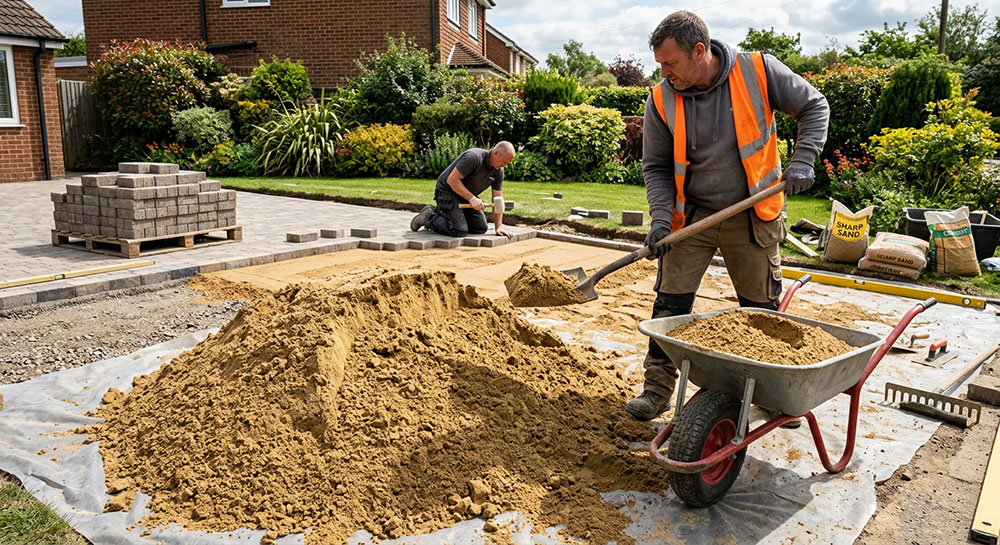
Why Sharp Sand Is Essential for Paving and Landscaping Projects
When designing a new patio, driveway or garden pathway, the look of your finished project is likely to be foremost in your mind. When creating any new garden project, you’ll want to ensure that the completed project looks and feels exactly how you want it to. However, achieving a long-lasting finish is much easier if you take the time to lay the proper foundations first.
Key Summary: Sharp Sand for Paving Projects
- Stability: Unlike other types of sand, sharp sand is made up of larger, angular grains. This means it compacts well and interlocks, creating a rigid, load-bearing bedding layer that is ideal for projects such as block paving.
- Excellent drainage: Drainage is an important consideration for any garden landscaping project. The coarse texture of sharp sand allows water to drain effectively and helps prevent trapped water beneath paving.
- Versatile: Sharp sand is a popular landscaping material because of its versatility. It can be used for dry-compacted beds for block paving or combined with cement to create mortar beds for natural stone and porcelain paving.
- Coverage: A standard paving bedding layer will typically be around 35mm to 50mm thick. Calculate the volume required based on your total surface area and allow approximately 10% extra for compaction and variations in the sub-base.
Why Sharp Sand Is Essential for Paving
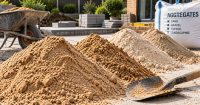
Building and landscaping projects generally use two main types of sand: soft sand, sometimes known as builder’s sand, and sharp sand, which is also commonly referred to as grit sand.
Soft sand consists of small, rounded grains. Its primary use is for creating mortar when combined with Portland cement. It produces a smooth, workable mortar that is ideal for bricklaying. However, its smooth grains make it unsuitable for use as a standalone paving bedding layer. Because the rounded grains can slide past one another easily, they cannot form the same stable surface as compacted sharp sand without a binder such as cement.
Sharp sand contains a mixture of larger angular grains and small stone particles. When compacted, the jagged edges of the individual grains interlock, helping to create a rigid and stable bedding layer for paving.
Choosing unsuitable materials or cutting corners with your paving foundations can result in premature deterioration. Problems such as movement, sinking and uneven paving can sometimes mean lifting the affected area and starting again. Using the correct sharp sand for paving and landscaping can therefore play an important role in creating a durable patio, path or driveway.
While choosing the visible surface materials, such as paving slabs, porcelain or natural stone, may be the most enjoyable part of a landscaping project, the construction beneath them is just as important. The bedding and sub-base layers do much of the structural work, and the longevity of the finished project depends heavily on them.
Sharp Sand Creates the Perfect Paving Laying Course
Achieving a flat and durable patio surface requires a reliable bedding layer over a properly prepared MOT Type 1 sub-base. Using sharp sand for patios can provide a suitable foundation for block paving and can also form part of a mortar bedding mix for paving slabs.
Sharp sand can be spread evenly over a prepared sub-base and compacted to the required level. Its coarse but relatively consistent texture makes it easier to level without large stones creating high points beneath the paving.
For block paving, sharp sand can form part of a compacted laying course. For paving slabs and natural stone, it is commonly combined with Portland cement to create a mortar bed. A properly prepared laying course helps support the paving evenly and reduces the likelihood of individual blocks or slabs moving during use.
How Sharp Sand Can Help Prevent Sunken Paving Slabs
Effective drainage is an important consideration in landscaping projects, particularly given the wet and changeable British weather.
Improved Drainage
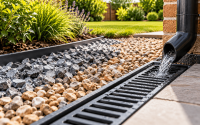
The coarse texture of sharp sand can help water move through the bedding layer more effectively than finer materials. This reduces the likelihood of water remaining trapped beneath paving.
For SuDS-compliant paving projects, a specifically designed permeable sub-base and clean, open-graded permeable aggregates may be required instead of a conventional sharp sand construction.
Frost-Thaw Protection
When water becomes trapped beneath paving and freezes during winter, it expands. Repeated freezing and thawing can contribute to movement, uneven slabs and damaged joints.
A correctly constructed and well-draining paving system helps water move away from the surface, reducing the risk of problems associated with frost and standing moisture.
Reducing Salt Staining and Efflorescence
Good drainage can also help minimise prolonged moisture beneath paving. Excess moisture may contribute to visible salt deposits, commonly known as efflorescence, appearing on some paving materials.
How Much Sharp Sand Do You Need for Paving?
Calculating how much sharp sand you need before beginning your project can help avoid delays and additional delivery charges. As a general guide, a standard bedding layer beneath block paving or paving slabs may be around 35mm to 50mm thick, depending on the paving system being installed.
To calculate the volume of sharp sand required, multiply the total surface area in square metres by the required depth in metres.
For example, a path measuring 10 square metres with a 40mm bedding layer requires:
10m² × 0.04m = 0.4m³
The exact weight will depend on the density and moisture content of the sand supplied, so always check the stated coverage and weight of the bulk bags you are purchasing.
As a general rule, allow approximately 10% extra sharp sand when ordering. This provides additional material for compaction, minor variations in levels and unexpected changes in the depth of your laying course.
Sharp Sand for Paving Projects: FAQs
Why should I use sharp sand for paving instead of soft builder’s sand?
Sharp sand has larger, angular grains that interlock when compacted, helping to create a firm and stable bedding layer with good drainage characteristics. Soft builder’s sand consists of much finer, smoother grains and is primarily designed for uses such as bricklaying mortar rather than as a standalone paving laying course.
Can I use sharp sand for patios made from natural stone or porcelain?
Yes. Sharp sand is commonly used as part of a mortar bedding mix for natural stone paving such as Indian sandstone. A typical mortar bed may use sharp sand and Portland cement, although the exact specification should suit the paving manufacturer’s installation requirements.
For non-porous porcelain paving, a suitable mortar bed is normally combined with a slurry primer or bonding agent applied to the underside of the paving to help achieve a secure bond.
What is the difference between sharp sand and grit sand?
The terms sharp sand and grit sand are often used interchangeably. Both generally refer to a coarse sand made up of angular particles. Products may also be described as coarse sand or washed concreting sand, although specifications can vary between suppliers.
Does sharp sand help with drainage?
Yes. The larger particle size and relatively low level of fine material in sharp sand allows water to move through it more readily than finer sands. When used as part of a correctly designed paving system, this can help prevent excessive moisture from remaining beneath the paved surface.