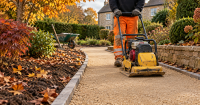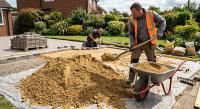
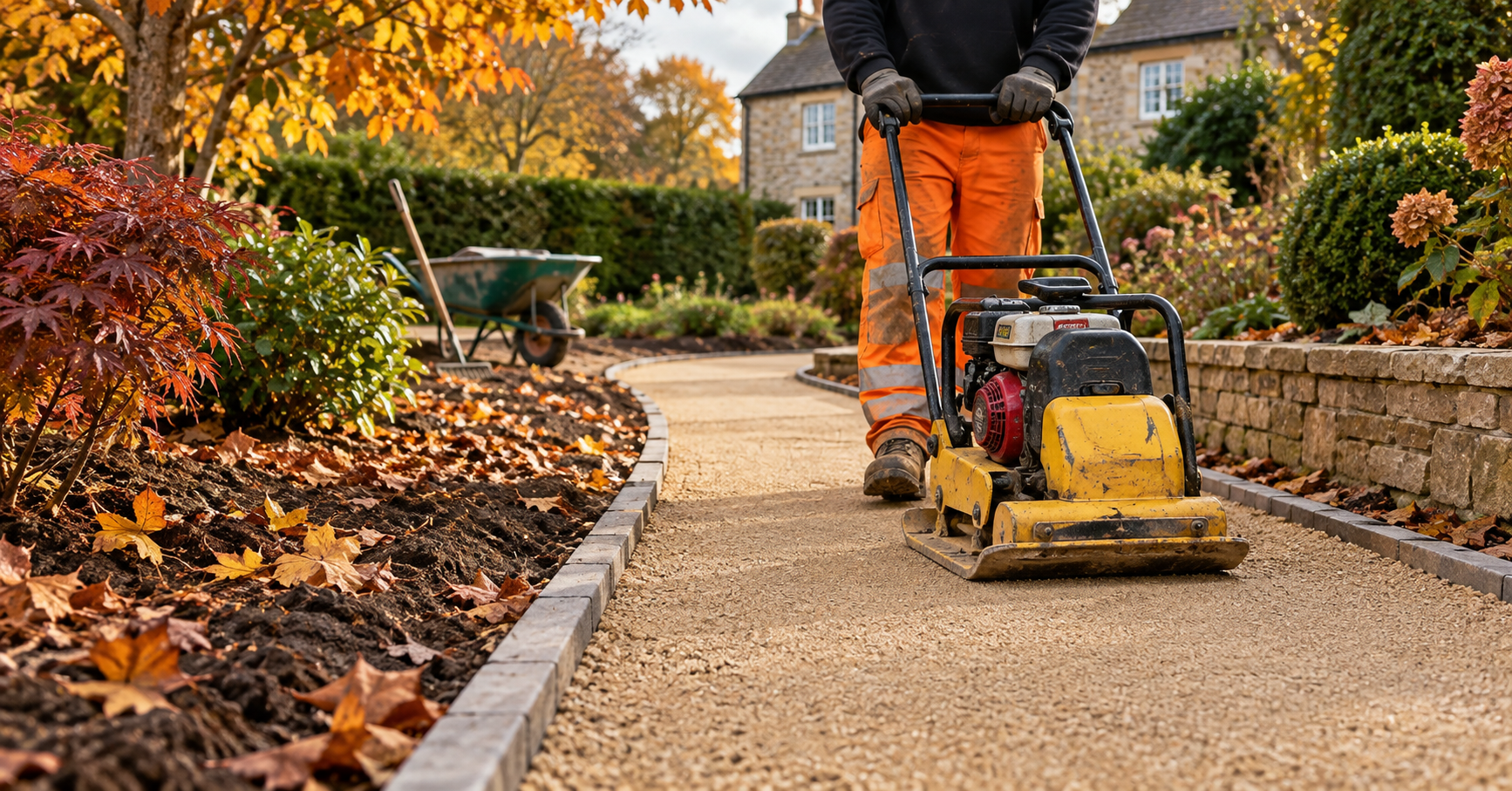
Autumn can be an excellent time to install a self-binding gravel path, with cooler temperatures, softer ground and naturally damp conditions all helping with excavation, compaction and binding.
As we start to see the evenings draw in and cooler weather arrive, it is time to start considering what autumn projects you need to do in your garden. This time of year is perfect for pruning trees and bushes and tidying up lawns, so that you’re ready when spring comes and you want to start planting. However, it isn’t just about plants and flowers; this time of year is also ideal for many bigger garden projects.
It is easy to assume that autumn and winter are best avoided when it comes to laying paths and installing new garden décor, but actually for projects such as pathways this is the perfect time of year to get started.
If you have decided that self-binding gravel is your material choice for your new path, then this is most definitely a great time of year to make a start. Self-binding path gravel relies on a balance of moisture, soil conditions and compaction to cure properly — and autumn weather can provide all three.
What Makes Self-Binding Gravel Different?
Unlike standard loose gravel, self-binding gravel contains fine particles that help the material bind together when correctly watered and compacted.
If you have decided that gravel is the right choice for your new garden path, then it is time to decide which type of gravel. Loose gravel can be a great choice, but you should be aware of the potential issues with this material.
Loose decorative stone or chippings are easily kicked onto lawns or stick to shoes and distribute themselves outside of the pathways. The great thing about self-binding gravel is that it contains fine stone dust and clay particles that interlock under compaction.
When rolled, it forms a firm, smooth, non-slip surface that easily accommodates pushchairs, wheelchairs and garden machinery while maintaining a traditional, rustic look.
Why Is Autumn a Good Time to Install Self-Binding Gravel?
Cooler temperatures, softer ground and naturally damp conditions can make autumn particularly well suited to preparing and compacting a self-binding gravel path.
Although this summer has been exceptionally hot, even average summer weather can make large garden projects harder. Not only does hot weather make physical labour more difficult and uncomfortable, but prolonged heat can bake the ground, making it hard and difficult to dig.
Winter can have the opposite problem: too much rain can make the ground soggy, which means that digging it can be just as difficult as it was during hot weather. Early autumn rains can soften the soil enough to make excavating paths more straightforward, helping you lay a stable MOT Type 1 sub-base without battling rock-hard earth.
On top of this, when you are using any type of self-binding aggregate, water is an essential part of the installation process. Water activates the fine particles that lock the aggregate together. The cool, moist conditions of autumn can prevent the material from drying out too quickly during rolling, allowing the gravel to bind evenly and form a firm finish.
Installing your pathway late in the year also gives the aggregate time to settle over the cooler months. By the time spring arrives and foot traffic increases, your path can be fully settled and ready for the increased use that better weather often brings.
Protecting Your Garden From Winter Weather
Installing a dedicated path before the wettest part of the year can help protect lawns and borders from repeated winter foot traffic.
Frequent walking across lawns during wet weather quickly turns grass into unsightly mud tracks that get trodden into the home. Establishing a dedicated self-binding gravel path before the worst winter downpours keeps boots cleaner and helps protect nearby garden borders from erosion.
Taking advantage of autumn’s favourable working conditions means your garden can remain more practical throughout winter while giving the new pathway time to settle before spring.
Get the Hard Landscaping Ready Before Spring
Completing hard landscaping in autumn means your paths can already be in place when you want to concentrate on planting and enjoying the garden in spring.
Autumn is sometimes treated as the point when garden work should stop, but it can be a very practical time for hard landscaping. Cooler temperatures make excavation more comfortable, while moderate rainfall can provide useful moisture during the installation and compaction process.
Installing a self-binding gravel path during suitable autumn conditions also means you can avoid carrying out the work during the hottest part of summer or waiting until spring when other garden jobs begin to take priority. Once the warmer weather returns, the pathway is already in place and ready to use.
Self-Binding Gravel Path – FAQs
How does self-binding gravel stay firm compared to standard loose gravel?
Self-binding gravel contains a precise mix of aggregate, stone dust and natural clay fines. When spread, wetted and rolled with a heavy roller, these fine particles fill the voids between stones, locking them tightly together into a smooth, firm, non-slip surface that doesn't migrate like loose path gravel.
Can self-binding gravel be installed during cold or wet autumn days?
Yes, autumn moisture is actually beneficial for installation. However, you should avoid laying it in torrential rain, which can wash away the fine particles necessary for binding, or during severe sub-zero frosts. Cool, damp autumn days provide ideal conditions.
How deep should self-binding gravel be laid?
For a standard garden path, we recommend laying self-binding gravel to a finished, compacted depth of 50mm (2 inches) over a well-compacted 100mm–150mm MOT Type 1 sub-base.