
Whatever type of project you are undertaking, ensuring you have the right materials and the right volume of materials is a must – and commercial groundworks is no exception. The last thing you want is to have overspent on unnecessary materials, or to be experiencing a project delay because you don’t have enough. On top of that, having the right materials to meet your project specification and structural requirements is essential.
Key Summary: 6F2 vs 6F5 at a Glance
- Material Source: 6F2 is made exclusively from recycled materials, whereas 6F5 can be produced from either recycled materials or primary quarried stone.
- Particle Grading: Both 6F2 and 6F5 are graded to approximately 100mm down to dust. The main distinction is their source material rather than their broad particle size.
- Cost vs Consistency: Choosing between recycled and quarried material is primarily a matter of cost and the consistency required for the project.
- Project Suitability: Both materials can be used for applications such as capping, bulk fill and haul roads, provided the selected material meets the project specification.
- Ordering and Delivery: Mainland Aggregates does not supply loose aggregate in quantities below 10 tonnes. For smaller orders, bulk bags are generally more economical, with a maximum weight of 850kg per bag.
What Are 6F2 and 6F5 Capping Aggregates?
If you’re building over weak ground such as soft clay, you may need a structural capping layer to help stabilise the subgrade and create a suitable working platform. 6F2 and 6F5 are types of capping aggregate used in civil engineering, road construction and commercial groundworks.
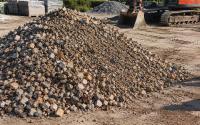
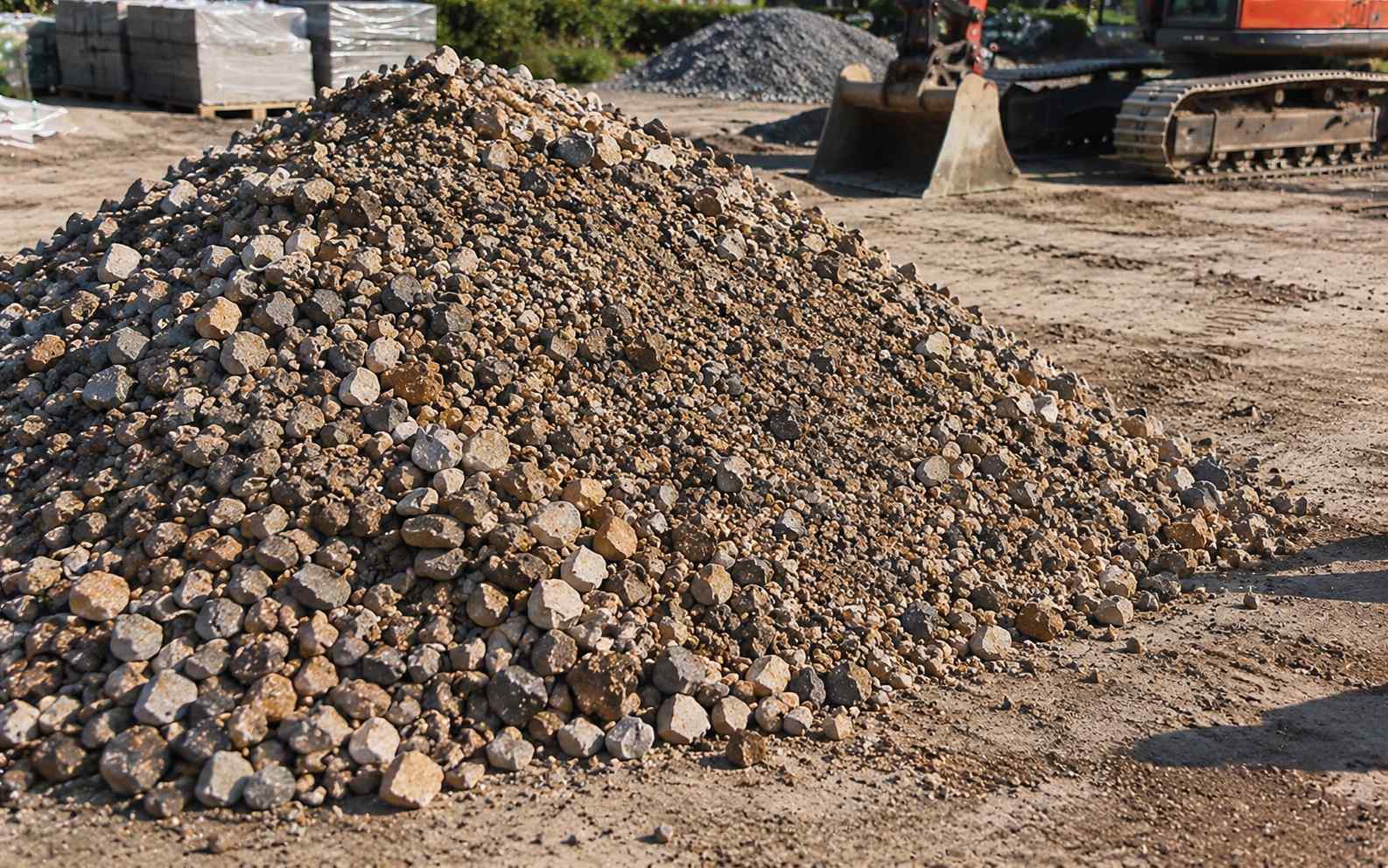
Both materials contain a mixture of larger aggregate particles and finer material. When correctly placed and compacted, this grading helps the material bind together to form a stable layer.
The key difference between the two is their source. 6F2 recycled capping is made exclusively from recycled material, while 6F5 capping can be supplied using recycled or quarried material.
Grading and Particle Size
Before you decide which material is right for your project, it is important to understand how they compare. Unlike some aggregates that are separated by stone size, both 6F2 and 6F5 are graded to approximately 100mm down to dust.
This means they share a broadly similar particle size range and can provide the coarse structure and finer material needed to form a compacted capping layer. The real distinction lies in what the aggregate is made from rather than how finely it is crushed.
When specifying either material, always check that the grading and product characteristics meet the requirements of your project. The suitability of a particular aggregate will depend on the ground conditions, intended loading and engineering specification.
Recycled vs Quarried Capping
The main choice when comparing 6F2 and 6F5 is whether you require recycled or quarried material. 6F2 is produced exclusively from recycled aggregates, while 6F5 is available in recycled and quarried variants.
6F2 – Recycled Only
6F2 recycled capping is produced from processed demolition materials such as crushed concrete, brick and mortar. It provides a cost-effective option for projects where recycled capping material is suitable for the required application.
As with any recycled aggregate, the characteristics of the material can vary according to its source and processing. It is therefore important to check that the supplied material meets the requirements of your project.
6F5 – Recycled or Quarried
6F5 capping can be produced from recycled materials or primary quarried stone. Quarried variants may use materials such as limestone, granite or other suitable rock, depending on the source.
The decision to use quarried rather than recycled 6F5 is mainly about balancing cost against material consistency. Quarried material can offer a more consistent source of stone, which may be important where a project has specific requirements for material characteristics.
However, recycled 6F5 can also be a suitable option where it meets the project specification. The choice should be based on the required performance, availability and budget rather than assuming that one material is automatically suitable for every application.
You can also explore Mainland Aggregates' wider ranges of recycled sub-base aggregates and quarried sub-base aggregates.
Suitable Project Stages and Applications
Matching the aggregate to your build phase and engineering specification helps prevent costly issues on site. Both 6F2 and 6F5 can be used for applications such as capping layers, bulk earthworks, temporary haul roads, hard standings and piling mats, provided the material is suitable for the project.
Recycled 6F2 can be a cost-effective choice for enabling works and general groundworks where recycled material is permitted by the specification. Recycled or quarried 6F5 may also be appropriate for these applications, with the choice depending on the required material consistency and available budget.
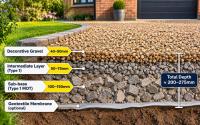
For projects involving roads, commercial car parks or industrial developments, the complete ground build-up needs to be considered. Capping material is not automatically interchangeable with a specified sub-base product. Where a project requires a particular sub-base grading, such as MOT Type 1, the specified material should be used in accordance with the design.
If you are unsure which aggregate is appropriate, speak to your project engineer or contact Mainland Aggregates for help identifying the available materials.
Ordering 6F2 and 6F5
When estimating how much aggregate you need, start by calculating the volume of the area in cubic metres. Multiply the length by the width and the required depth, using measurements in metres.
To convert the volume into an estimated tonnage, you will need to use the appropriate density for the material being supplied. This can vary between products and sources, so avoid relying on one general conversion figure for both 6F2 and 6F5. Mainland Aggregates provides approximate density information on its individual product pages, which can help with initial calculations.
It is also worth allowing for compaction and site wastage when planning your order. For larger projects, your site engineer or materials supplier can help check the estimated quantity before delivery is arranged.
Bulk Bags vs Loose Deliveries
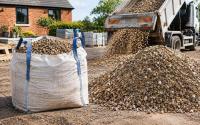
- Loose Loads (10 Tonnes or More): Mainland Aggregates supplies loose aggregate in quantities of 10 tonnes or more. For larger groundworks projects, loose tipper deliveries are generally the most practical option.
- Bulk Bags (Under 10 Tonnes): Mainland Aggregates does not supply loose aggregate in quantities below 10 tonnes. For smaller orders, bulk bags are generally the more economical option. Each bulk bag has a maximum weight of 850kg.
Before booking delivery, confirm the quantity required, the delivery format and whether your site has suitable access and unloading arrangements. You can find further details in our delivery information.
By matching the aggregate grading and choosing between recycled or quarried material to suit your engineering specification, you can make a more informed decision about the foundations of your project. Browse Mainland Aggregates' 6F2 recycled capping and 6F5 capping online, or speak to the team for help with your requirements and delivery options.
6F2 vs 6F5 Aggregate – FAQs
Can 6F5 replace MOT Type 1 sub-base?
Not necessarily. 6F5 is a capping material commonly used as an initial layer beneath a more specific sub-base material. Where a project specification calls for MOT Type 1, 6F5 should not automatically be treated as a direct replacement. The correct material and layer build-up depend on the design and intended use. For driveway sub-bases, Mainland Aggregates advises using Type 1 or Type 3 rather than 6F5.
How thick should a 6F2 or 6F5 capping layer be?
The required depth depends on the ground conditions, subgrade strength, expected loading and the project specification. A ground investigation and the advice of the project engineer should determine the required depth. The material should be spread and compacted in suitable layers using appropriate equipment.
Can I order less than 10 tonnes of 6F2 or 6F5?
Mainland Aggregates does not supply loose aggregate in quantities below 10 tonnes. For orders under 10 tonnes, bulk bags are generally the more economical option. Each bulk bag has a maximum weight of 850kg.