Can Self Binding Gravel Be Laid on Concrete?
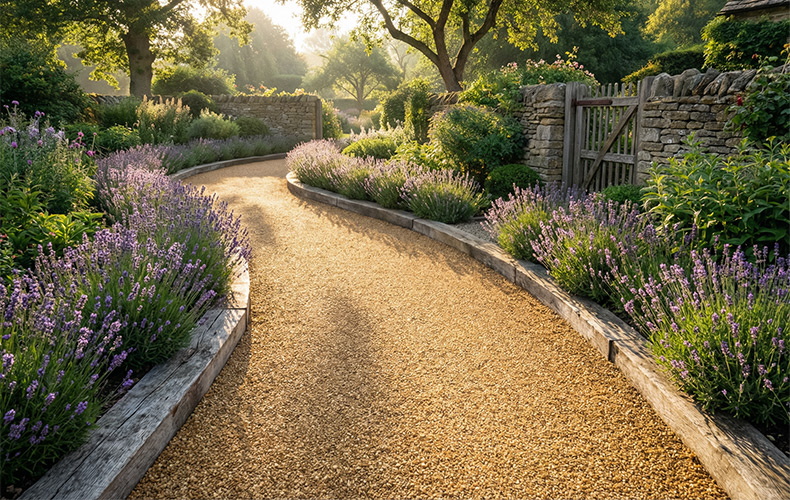
Self binding gravel is a popular choice for garden paths and heritage-style landscaping because it creates a firm, natural-looking surface once compacted. However, one of the most common questions is whether it can be laid directly over concrete, tarmac or existing paved paths.
Why Concrete Is Not an Ideal Base
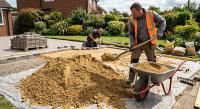
Self binding gravel relies on controlled moisture and compaction to create a stable surface. It must be laid on a suitable free-draining, compacted sub-base such as MOT Type 3.
Concrete and old paving slabs are impermeable. They do not allow water to drain naturally through the structure. If self binding gravel is laid directly on top, water can become trapped between the concrete and the gravel layer.
Poor drainage is the number one cause of surface failure. When water cannot disperse correctly, you can expect:
-
Soft or spongy patches
-
Cracking
-
Surface movement
-
Moss and algae growth
Over time, the surface will break down because the binding fines lose strength in constantly wet conditions.
The Importance of Drainage
Even with the correct sub-base, self binding gravel must always be installed with a camber or crossfall. This ensures water sheds off the surface instead of sitting on it.
Concrete paths are often completely flat. If you simply spread gravel over the top, standing water will remain on the surface. Without proper fall, the material will deteriorate much faster.
A correctly installed surface should guide water away from buildings and allow it to disperse naturally.
Can It Ever Be Done?
If you want to retain an existing concrete base, it must meet several conditions:
-
The concrete must be stable and not cracked.
-
There must be enough depth to install a free-draining sub-base layer above it.
-
The finished surface must include a camber or crossfall.
Simply applying a thin layer over slabs will not last. At Mainland Aggregates, we recommend you don’t use self binding gravel over a concrete base at all.
Installation Conditions Matter
Self binding gravel should never be laid when it is soaking wet or bone dry. If it is saturated, compaction will be lost. If it is too dry, it will not bind properly. The material should be slightly damp to allow the fines to knit together under compaction.
Minimum compacted depths are typically 50-75mm for pedestrian paths. Cutting corners on depth or preparation will shorten the lifespan of the surface.
The Practical Recommendation
While it may seem cost-effective to use an existing concrete path as a base, long-term performance depends on drainage and structure. In many situations, removing the old surface and building up from a properly prepared, free-draining sub-base delivers a far better result.
If you want a self binding gravel surface that remains firm, stable and low maintenance, correct groundwork is essential.
IMPORTANT NOTICE – DOES NOT APPLY TO LOOSE DELIVERIES
- Orders are delivered by an 18t rigid vehicle with a tail-lift and manual pump trolley.
- A level tarmac, concrete, or block-paved area is required for unloading; the trolley cannot operate on grass, gravel, or slopes.
- The lorry (10m L x 2.8m W x 4m H) does not have a HIAB crane and cannot lift over fences/hedges or deposit bags on grass or gravel.
- Customers must ensure access roads and the unloading site are suitable for the vehicle. Inform us immediately of any access issues at 01234 831108
- Delivery guarantees kerbside only, though drivers will try to place orders in the required area.
- HIAB crane delivery is available for orders of 10+ bags/pallets at extra cost.